A doorway’s warning…

Those who I’m close to often comment on my rather sharp sense of humor but I tend to use that as a doorway, not a weapon, mind you. I have a tendency to share stories which carry a great deal of emotional weight. My preference is to avoid being entertaining, choosing instead to focus on revealing something underneath. Let’s just call it my “warning label”.

For starters, I’ll attempt to make you laugh before I make you think. I will ask uncomfortable questions because comfortable answers rarely change anyone. Loyalty comes easily but trust does not. If I care about you, I will challenge you, defend you, and occasionally disappear to recharge before returning as if no time had passed. It might be difficult for some to believe, but I collect more moments than possessions, truths more than approval. Take a chance if you will and mistake my quiet for weakness if you must. Trust me, I will survive such a misunderstanding.

Fair warning to any and all interested parties, I am not everyone’s cup of tea as I’m much too curious to stay shallow. I’m much too damn stubborn to pretend and may “accidentally” expose your blind spots while wrestling with my own.

Beyond the doorway, with my warning label pushed to the side, I never tire of peeling people back to who they really are, not to judge them, more to understand them. Everyone has a version of themselves they share with strangers, another they show their friends, and one they carry when no one is looking. That’s the person who garners my interest. Polished stories rarely teach me (or anyone else) anything. It’s those cracks that let the light through. Every conversation is another chance to discover why someone became who they are…including me.

I never get tired of finding meaning where other people overlook it. A forgotten photograph, an old scar. A joke with perfect timing, a quiet act of kindness that nobody applauds. Life hides its best lessons in ordinary places and I’ve been fortunate in life to discover so many. In some ways, this has made me slower to judge, quicker to listen, and endlessly curious about what lies beneath the surface of others.

I’ve stopped trying to be easily understood. Some people need everything wrapped neatly, labeled clearly, and delivered without any commotion. I am not built that way as I ask questions which make people uncomfortable. I’ve learned that growth rarely happens inside comfortable conversations. I manage to laugh often, sometimes at the absolute absurdity of life and others, sometimes at myself. Once in a while, my sarcastic humor has carried me through places that tears alone could not.

Acquaintances? I don’t collect them, I collect stories. I remember the details people think no one notices. Screw popularity, I value honesty over that, truth over approval. I’ve earned the criticism from people who mistake honesty for hardness and independence for arrogance. Hell, they’re all entitled to their opinions as I am entitled to keep becoming the person I was meant to be. I’ve spent too much of my life explaining my intentions to those people committed to misunderstanding them. These days, I let my character do the talking as it has a better vocabulary than my defenses ever did.

If this requires a warning label, let it read: Proceed with honesty and caution. I do.

From the Writer’s Workshop: If each person had a warning label, what would yours say? What’s something you never seem to get tired of doing?

Signature

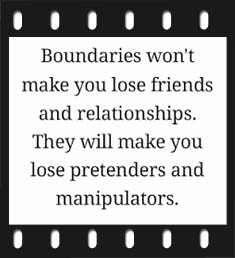
Boundaries…

Manipulative individuals often use calculated behaviors to control social dynamics and undermine group cohesion. Through tactics like gaslighting and selective gossip, they distort reality and manufacture unnecessary conflict, strategically isolating members to consolidate influence. They frequently deflect accountability by playing the victim and utilizing guilt to manipulate others.

In communication, they employ backhanded compliments and passive-aggressive remarks to erode the confidence of perceived threats. Furthermore, they may weaponize confidential information to ensure compliance. As these toxic patterns escalate, the group environment deteriorates from supportive to hostile. Recognizing these warning signs is essential for members to establish firm boundaries.

Ultimately, addressing the behavior directly or distancing the group from the individual is often necessary to restore a healthy, trusting environment.

From the Writer’s Workshop: Write a post in exactly 9 sentences.

Signature

The absence of noise…


Between what is said and not meant, and what is meant and not said, most of love is lost.”
Khalil Gibran

Over the past few years, I had many experiences of silent retreats as humanity took shelter from what I always call the “manufactured pandemic” that held our world captive. Not all bad, in some ways, I had the opportunity to reflect on the power of silence and subsequent responses elicited from people. Some embrace silence and I am one of them. However, the retreat experience, dominated by silence, reminded me of all that people keep bottled up inside and find difficult to share, with anyone.

We all have friends who bond over similar family struggles, feeling shocked and hurt by what others have had to endure. There is some element of solace in that shared pain and we often wonder why it takes us so long to open up. These experiences are not uncommon. Even with family and close friends, we mindfully leave out important details, or refrain from sharing certain experiences altogether and escape to our silent, mental, escape room.

There are those many things we don’t talk about. On social media, at dinner parties or in private conversations with friends. At least most of us don’t. The truths and experiences we keep hidden are like hand-written notes, safely tucked away between pages of a book that we will never read again. The potential healing available in silence and being with our difficult thoughts is not always pleasant or comfortable and this is one of the reasons that many people avoid sharing with others. Using silence, both positively and negatively, when we communicate can influence our relations. Many of us have that fear of not being validated and can usually recognize the difference between a disapproving silence and that which confirms that what we are saying is truly being listened to by others.

By sharing only what feels appropriate, safe, comfortable or absolutely necessary, we dilute the vulnerability and intimacy that is integral to our survival, concealing those human frailties that have the power to connect us beyond our physical, cultural, social and other distinctions. This makes us all alone together, each holding onto something that could be used to build a bridge between us. Yet, there is so much space.

We keep things to ourselves because we want to preserve our sense of self. Because we need to maintain our place in the world and feel a sense of safety. Because we want to protect the people we love. We keep things to ourselves for fear of judgement and rejection. Because we are not ready to confront or bear the consequences of our own truths. What we don’t talk about makes homes inside of us, growing like weeds in the garden of our memories. Sometimes, they keep us up in the middle of the night and manifest as physical pain. We end up paying a price for what should be released, our peace of mind, our well-being and our capacity to share love. Our greatest fear lies in being seen for who we truly are. If we truly see each other, we are exposed, less in control and definitely more vulnerable. Saying that we are well helps us to avoid the reality of the present moment, something oddly comforting, and it is self-preservation.

It is clear that silence has power, along with being the absence of noise.. Like any power it can be used to hurt or to heal and perhaps this is why people respond so variably to it. For some people silence means loneliness, isolation or awkwardness. It can be used to indicate emotional withdrawal, disapproval or even punishment. In our language the word silence is often used with negative connotations; a conspiracy of silence, being given the silent treatment, lifting the veil of silence. In our busy, noisy world many people seem to fear silence.

We all dream about different realities, a world where truths can be shared, where friends can tell each other they are feeling defeated, sad, anxious or alone, without worrying about what the others may think, things people really should talk about but nobody wants to do so. Holding back our truths can be so much more harmful than sharing them. When we avoid being real, we contribute to a distorted reality. We cannot heal wounds if we fail to acknowledge them and, in the process, we end up with a difficult time accepting each other. Siblings and friends with decades of hurt that has lingered between them, so much so, that the idea of reaching out feels impossible. One can be surrounded by people, belong to an organization, yet still feel so deeply alone. It’s doubtful that we can transform loneliness by simply being together, sharing space and meaningful conversations.

Honesty and unconditional love where communication is concerned can help us find our way back to ourselves and each other. Build bridges that reconnect us with those we love and create space for others to do the same.

From the Writer’s Workshop: What does nobody want to talk about, but really should?


Signature